
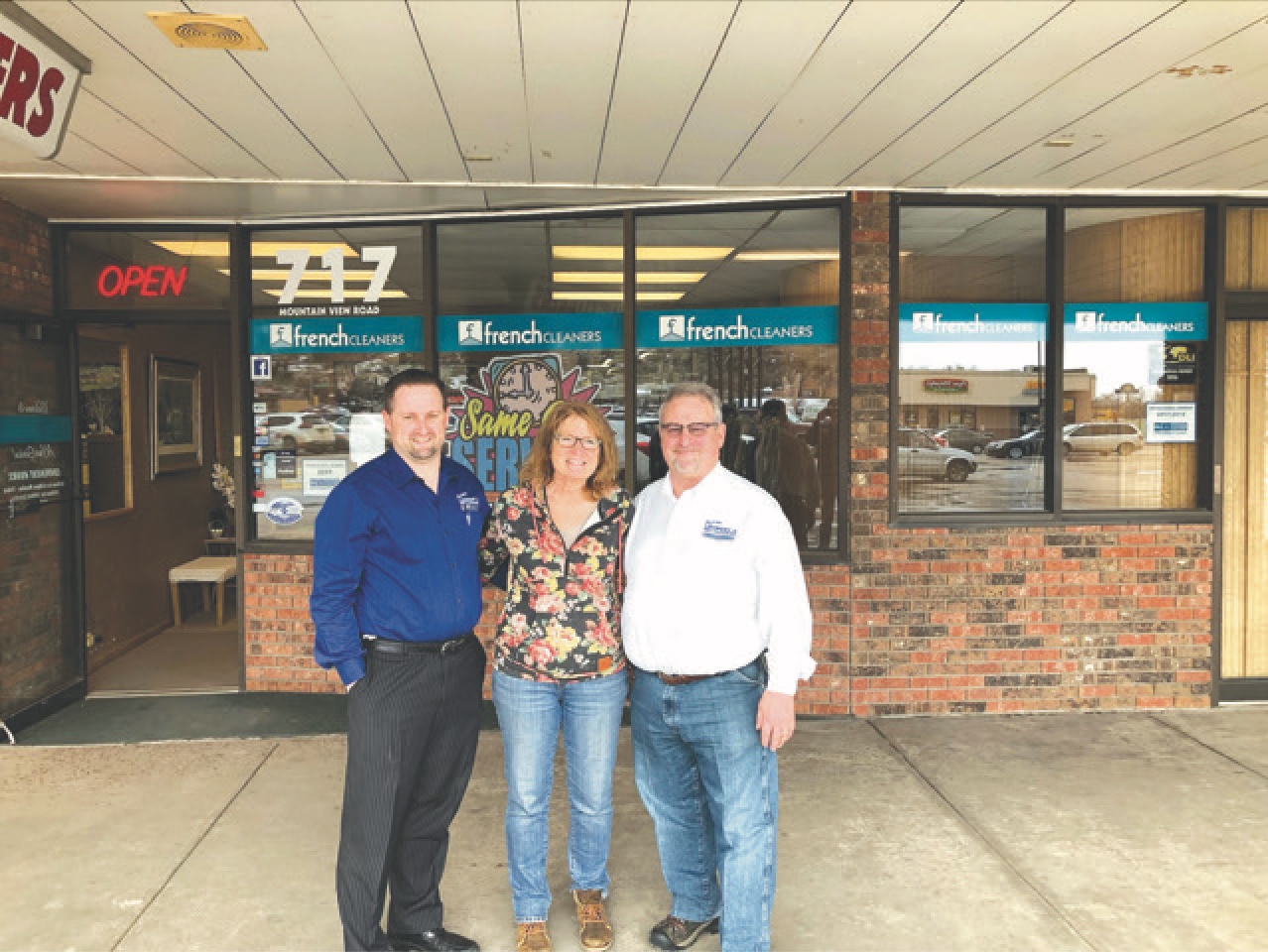
Current Position: James “Clark” Sowers is the owner of Sowers and Son Dirty Laundry in Rapid City, South Dakota. This month marks a milestone for Sowers. He has been a business owner for fifty years, the last twenty-five in the garment care industry.

The Genesis: March 6, 1976, was supposed to be just that, a first day. Nineteen-year-old James “Clark” Sowers had joined his dad in the family trash collection business: one truck, a local contract, a handful of accounts. Three days later, his father’s heart problems, long thought to be behind him, returned with force. Two months after that, Sowers buried his dad.
“He had survived so many things,” Sowers says. “At 19, I felt he was invincible.”
The night his father died, the last words Clark heard were simple and searing: “Take care of your mother.”
“Which I did,” says Sowers.
Grief-stricken: Sowers remembers the stunned fog of those weeks and one moment in particular. A well-loved Protestant pastor tried to offer comfort at the funeral home, and Sowers rejected it. “What good God would take my dad away just when I need him the most?” he thought. For a time, Clark doubted God. But that wasn’t the moment that changed everything.
New Point of View: Perspective sometimes waits; that came four years later. Sowers was married and just two weeks away from the birth of his first child, a daughter named Jamie. “I realized I was days from becoming what I had only dreamed about, being a dad,” said Sowers.
Standing there, he understood something new. God had given him nineteen years with a good and loving father. “My dad was a gift,” Sowers fondly reminisces. “He impressed upon me the love of our Father. That was the moment that changed everything.”
Growth Spurt: With his mother as his partner, Clark grew Sowers and Son from one truck to seven, securing contracts across several towns in the northern Black Hills. “It was the opportunity my parents gave me to love being in business,” Sowers beams. “I believe we had the best trash collection company in the state.”
They sold the business in 1998. Clark didn’t slow down—he pivoted.
New Venture: At the time, outside companies were servicing Belle Fourche through drop stores. Clark believed the community needed investment. After attending the Drycleaning and Laundry Institute in November 1999, he opened his own dry cleaning plant on Main Street on March 6, 2000.
Within a year, the drop stores were gone.
More Than A Slogan: Today, Sowers and Son Dirty Laundry operates two drycleaning plants, Belle Fourche and Rapid City, along with laundromats across western South Dakota that double as drop locations. Ask Sowers what they specialize in, and he doesn’t hesitate. “Customer service,” he says.
Then the mantra: “The main thing is to keep the main thing, the main thing.”
He explains it simply. “Each customer’s day begins with us when they put on their clothes. If a button is missing… bad day.”
Grace Above Perfection:
Sowers doesn’t pretend mistakes don’t happen. “We’re human,” he says. “So when someone is dissatisfied, we re-clean or re-press—no questions asked. It’s a learning opportunity.”
In a state with very few dry cleaners left, Sowers reminds his team: “We want them to come to us because they want to, not because they have to.”
“Growing Broke”: “There’s only so much dry cleaning business in western South Dakota,” Sowers says. Expansion brought scale, but also strain. “We were growing but growing broke.”
Payroll was debited from his personal account more than once. The hardest conversation was asking his wife, Cathy, to return to work to help save the business. They home schooled their children and had ten kids to support.
One night, facing failed financing, they prayed and cried together. The next day, a former football teammate pointed Sowers to the right banker. Within three days, the loan came through, largely because Cathy had a stable nursing career.
Reframed By Faith: In 2015, Sowers attended a Sioux Falls Catholic Business Association conference and encountered “The Vocation of the Business Leader.” “I realized I’m involved in Christ’s business,” he says. “I’m only asked to manage it.”
That year brought loss, growth and clarity. His mother died. His father-in-law passed. His last competitor exited the market. A new laundromat was built. His son, Randy, joined the business.
“It doesn’t mean things will be easy,” Clark says. “It means things will be okay.”
Prioritizing Employees: The idea of “emotional security” came from marriage advice Clark once received and he applies it daily. Employees are helped with vehicles, banking, credit, benefits and second chances. Longevity tells the story: 34 years for one employee, seven for another.
Lives changed—families restored, managers developed, communities strengthened. “Emotional security is always a work in progress,” Clark says. “But people vote with their feet.”
Son Shine: “As a business partner, I’m in wonder,” Clark says of son, Randy. “If he weren’t my son, I’d have him as a partner on merit alone.”
Clark built the business. Randy is growing it. “We should have dust-ups,” Sowers says. “But I trust him implicitly.”
As a father, Sowers reflects quietly. “I worked three days with my dad,” he says. “I’ve worked eleven years with my son. Every breath a mercy.”
Industry Outlook: Sowers is realistic about where garment care is headed, especially in western South Dakota. “Economic trends arrive late here and leave early,” he says, which means fewer cleaners, but busier ones. He believes pressing will remain a differentiator. “Pressing is a lost art,” Sowers says. “And that’s what will keep this business alive.”
His laundromat-to-plant model supports that belief. Drop locations feed dry cleaning. Laundromats stabilize cash flow. “Clothes flow and cash flow,” he says. Technology may evolve, but the desire for clothes that look right hasn’t changed, and, in Sower’s view, won’t.
Defining Success: Once, success meant making the bank payment. Today, it’s culture, community, and what Clark calls “the common good.”
“Yes, it’s okay to make money,” he says. “But business is about paying good wages, serving the community and loving people.”
Then he smiles. “God irons out the wrinkles in our lives and removes the stains from our souls. But just because your dry cleaner has performed a few miracles doesn’t mean they’re God.”
Personal: Sowers, who turns 70 in July, met his wife, Cathy, while attending Black Hills State University (where he played and coached football) and they were married on October 27, 1979. Now more than four decades into marriage, they make their home in Belle Fourche, South Dakota.
Together, they raised ten children and today enjoy 28 grandchildren. Their firstborn son, Randy, who works alongside Sowers in the business, and his wife, Erica, have five children.
Family life for the Sowers has long been centered on shared faith and a commitment to multi-generational work and stewardship.
Bucket List: Clark and Cathy enjoy traveling to study and experience the history of great people and defining events, with a particular interest in American history. In the spring, they hope to visit Ulysses S. Grant’s Presidential Library in Mississippi. In recent years, their travels have also taken on a personal dimension, as they’ve traced family roots in Virginia and West Virginia—trips they’ve come to cherish as much for connection as for discovery.
Legacy: Ask Sowers what he hopes people say years from now, and he doesn’t mention stores or revenue.
“Your mom and dad made a difference in my life, and my family’s life.”
