
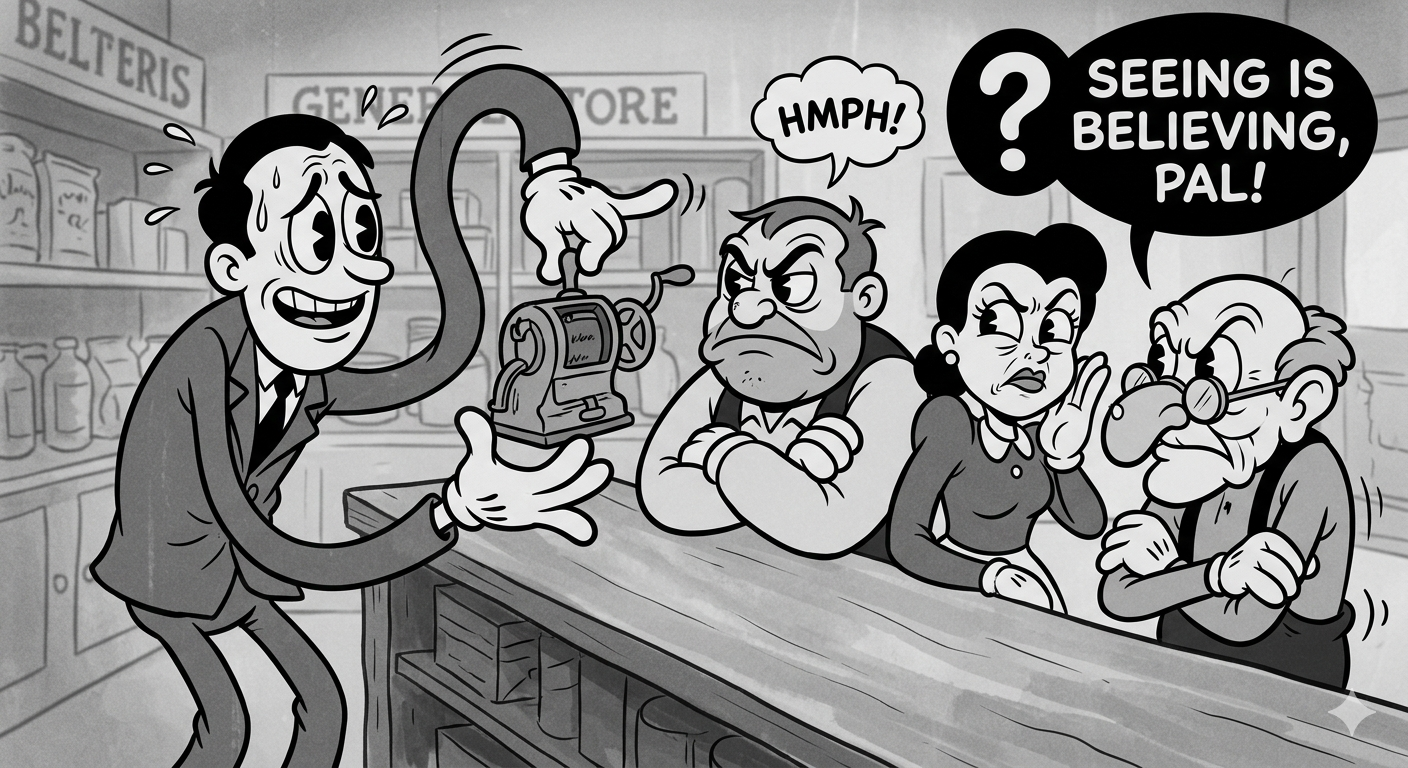
Most customers don’t leave after one big disaster. They leave after a bunch of small disappointments. A shirt that isn’t ready when you said it would be. A “we’ll call you” that never happens. A price that feels different from what they expected. None of those alone feels huge. But together, they quietly teach customers one thing: “I can’t really count on this place.” You don’t mean to send that message. But in the customer’s mind, you are always training them on what to expect. The question is: What are you training them to believe?
You’re Always Training Your Customers
Every time someone drops off or picks up an order, you’re teaching them something:
• If you’re ready when you said you’d be, they learn to trust your word.
• If you’re often late, they learn to add extra time “just in case.”
• If you fix mistakes quickly, they learn you’ll take care of them.
• If you argue or blame, they learn it’s risky to rely on you.
You’re always training. The only question is whether you’re training them to come back or to look elsewhere. Here are three common “trust leaks” in dry cleaning and laundry, and how to plug them.
1. Missed Promises
This one hurts the most. You say, “It’ll be ready Thursday after 4,” and they show up, and it’s not ready. In your world, maybe a machine went down, staff called in sick, or a button or zipper repair took longer than expected. Things happen. You know that. But the customer doesn’t see any of that. All they know is: “I planned around what you told me, and it wasn’t true.”
Over time, that teaches them three things:
• “Don’t bring anything important here.”
• “I need a backup outfit.”
• “Their ready times don’t mean much.”
Here is how to plug this leak:
• Be honest and a little conservative with due dates.
• If you know you’ll be late, call or text before they arrive.
• When you miss a promise, own it, fix it and thank them for their patience.
You won’t be perfect. But how you handle it is what they remember. But always remember this: while it may not be your fault, it is still your problem, and the customer wants it solved.
2. Mixed Messages
This happens when your signs, website, and staff don’t match. For example:
• The big sign says “Same-Day Service,” but the counter person says, “We don’t do that anymore.”
• Your website says “No extra fee for rush,” but the ticket shows a rush charge.
• A coupon says one thing, then the staff says, “That doesn’t count for this.”
From the customer’s point of view, it feels confusing and a little unfair. Over time, that teaches them:
• “I don’t really know what I’ll be charged.”
• “I have to watch everything closely here.”
How to plug this leak:
• Walk through your store and website like a customer. Are you seeing old offers? Old signs?
• Remove or update anything that’s not true right now.
• Make sure your team knows which services and prices are up-to-date.
Clear beats clever, and simple beats confusing. Every time.
3. Inconsistent Service
Sometimes your customers love you. And sometimes, not so much. Often, the difference is simple: It depends on who’s working.
• One staff member smiles, greets people, and is happy to help.
• Another barely looks up and acts bothered.
• One shift checks for missing buttons or loose hems.
• Another just runs tickets as fast as possible.
To the customer, that feels like a gamble. They don’t know which version of your business they’ll get that day. Over time, that teaches them:
• “Service here is hit or miss.”
• “I only want to come when my favorite person is working.”
• Or worse: “It’s easier to go somewhere else.”
This is how to plug this leak:
• Set a simple standard for the basics: greeting, tone, eye contact, and thank you.
• Train everyone on the same steps for check-in and check-out.
• When you see someone doing it well, call it out and praise it.
You’re not trying to turn people into robots. You’re just making sure the minimum experience is always strong. To beat the competition, you only need to be brilliant at the basics.
Trust Isn’t Built In a Speech
You can’t fix trust with one staff meeting or a new slogan on the wall. You fix it in small ways:
• Telling the truth about ready times
• Calling when something changes
• Making sure prices and promises match
• Giving the same good service, no matter who is at the counter
Customers don’t need you to be perfect. They need you to be reliable. And if you want to see where trust might be leaking, ask yourself these:
• Where do we sometimes promise something and not deliver?
• Is there any place where our signs, website, and staff might not match?
• Does the experience change a lot depending on who is working?
Fixing even one of these will help your customers relax and trust you more. Because at the end of the day, customers don’t just bring you clothes. They bring you their time, their plans, and their trust. And in this business, every bit of trust you keep is a customer you keep.
